The phrase “non-surgical body contouring” covers a wide range of treatments, technologies, and promises, and not all of them deliver equally. For anyone curious about addressing stubborn fat, loose skin, or areas that do not respond to diet and exercise, understanding what is actually supported by evidence versus what is driven by marketing is the most useful place to start.
This guide breaks down the most widely used non-surgical contouring treatments available in 2026, what each one does, who it works best for, and what realistic results actually look like.
Why Non-Surgical Contouring Has Gone Mainstream
The shift toward non-surgical aesthetic treatments has been consistent and significant. According to the American Society for Aesthetic Plastic Surgery, non-invasive body contouring procedures have grown year over year for the past decade, outpacing surgical options in both volume and patient satisfaction for mild to moderate concerns. The appeal is straightforward: meaningful results without general anesthesia, surgical recovery, or the risks that come with going under the knife.
The technology has also improved considerably. Early-generation devices offered subtle results that required significant patience and multiple sessions to notice. Current platforms deliver more consistent outcomes with better-defined protocols, and the range of concerns they can address has expanded well beyond their original applications.
Cryolipolysis (CoolSculpting): The Gold Standard for Fat Reduction
CoolSculpting remains the most clinically studied non-surgical fat reduction technology available. It works by applying precisely controlled cooling to targeted areas of the body, dropping the temperature of fat cells to a point where they undergo a natural cell death process called apoptosis, without damaging the overlying skin or surrounding tissue. Over the weeks following treatment, the body naturally processes and eliminates the dead fat cells, producing a gradual, visible reduction in the treated area.
What it treats well: Abdomen, flanks, inner and outer thighs, bra fat, upper arms, and the submental area beneath the chin. The chin and jawline application deserves particular mention for anyone looking to define your jawline without surgery, with detailed information on what to expect from the process, how much it costs, and what results look like over time.
What to realistically expect: Clinical studies have documented an average fat reduction of 20 to 25 percent in the treated area per session. Results are not immediate. The body’s elimination process takes time, and most patients begin to see visible changes between six and twelve weeks after treatment, with full results appearing at around three months. Some patients achieve their goal in a single session; others benefit from a second treatment to the same area.
Who it works best for: CoolSculpting is not a weight loss treatment. It is designed for patients who are at or near their goal weight and have localised areas of stubborn fat that do not respond to lifestyle changes. Patients with good skin elasticity in the treated area tend to see the cleanest results.
The National Institutes of Health has published multiple studies confirming cryolipolysis as a safe and effective non-invasive fat reduction modality, with a well-established safety profile and high patient satisfaction rates across treatment areas.
Radiofrequency Skin Tightening
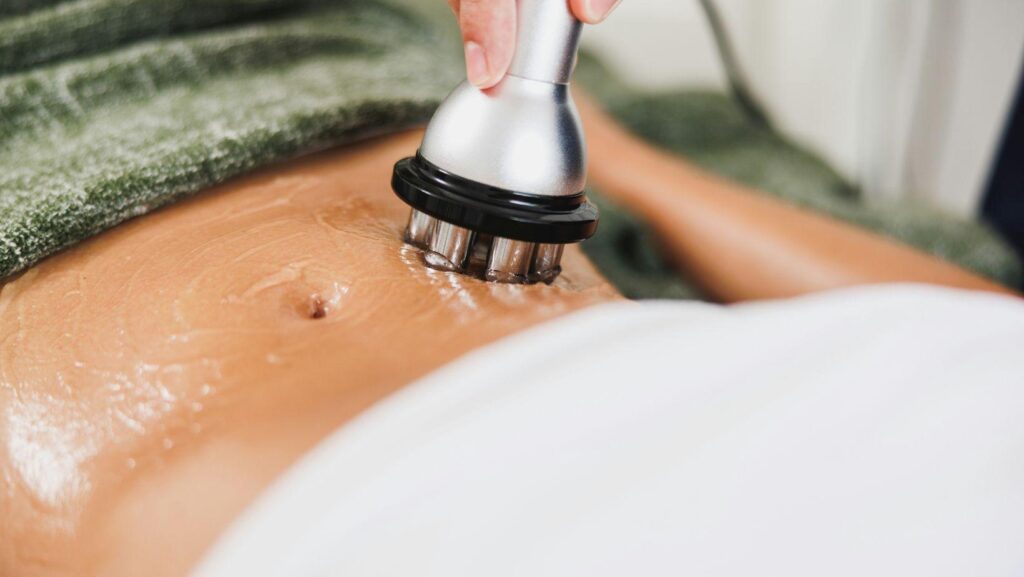
Where CoolSculpting addresses fat volume, radiofrequency (RF) treatments address skin laxity, the looseness or crepiness that can appear when the skin’s collagen and elastin structure has weakened. RF devices deliver controlled heat energy into the deeper layers of the skin, triggering a wound-healing response that stimulates new collagen production and gradually tightens the treated area.
What it treats well: Mild to moderate skin laxity on the face, neck, abdomen, inner arms, and thighs. It is particularly effective in the period following significant weight loss or after pregnancy, when the skin needs support in adapting to a changed body composition.
What to realistically expect: RF tightening produces gradual, progressive results rather than dramatic immediate changes. A course of treatments spaced several weeks apart typically produces the most noticeable outcome, with results that continue to develop over several months as collagen remodeling progresses. The improvement is real and measurable but works best for patients with mild to moderate laxity, not significant skin excess that would only respond to surgical intervention.
Who it works best for: Patients in their thirties through fifties with early to moderate skin looseness, particularly those who want to maintain skin quality proactively rather than waiting until changes become more pronounced.
High-Intensity Focused Ultrasound (HIFU)
HIFU devices, with Ultherapy being the most widely recognised brand, deliver focused ultrasound energy to precise depths beneath the skin surface, creating controlled injury points that stimulate deep collagen production. The technology was originally developed and FDA-cleared for skin lifting on the face, neck, and brow, and has since expanded into body applications.
What it treats well: Brow lifting, loose neck skin, jawline definition, and skin laxity on the upper chest. For facial applications specifically, it remains one of the most effective non-surgical options for addressing the early signs of skin descent.
What to realistically expect: HIFU results are some of the most gradual of any non-surgical treatment, with improvements developing over three to six months as the collagen response matures. A single treatment can provide results that last one to two years for appropriate patients. The procedure is more uncomfortable than most non-surgical options, and some patients find it significantly so, though the discomfort is temporary and manageable.
Injectable Treatments for Contouring
Non-surgical contouring is not limited to energy-based devices. Injectable treatments offer precise, targeted shaping that devices cannot replicate.
Deoxycholic acid injections (sold as Kybella in the US) dissolve fat cells in the submental area beneath the chin, offering a non-device alternative to CoolSculpting for double chin reduction. The approach requires multiple sessions and involves more post-treatment swelling than cryolipolysis, but produces permanent fat cell destruction in the treated area.
Dermal fillers for structural contouring can sharpen the appearance of the jawline, lift and define the cheekbones, improve chin projection, and restore volume that gives the face a more structured, youthful appearance. Unlike fat reduction treatments, fillers work by adding rather than subtracting, creating definition through strategic volume placement. Results are immediate and typically last twelve to eighteen months depending on the product and area treated.
According to the American Academy of Dermatology, the choice between different fat reduction approaches should be guided by the patient’s specific anatomy, the amount of fat present, and their skin elasticity, all of which affect which treatment will produce the most satisfying outcome.
What Non-Surgical Contouring Cannot Do
Understanding the limits of these treatments is as important as understanding their capabilities. Non-surgical contouring works well for targeted fat reduction and mild to moderate skin tightening in patients who are at or near a healthy weight. It does not replace the results of surgical procedures for patients with significant skin excess, large volumes of fat, or concerns that require structural changes only surgery can achieve.
Patients who have lost substantial weight and have significant loose skin, for example, will not achieve meaningful improvement from RF tightening alone. Similarly, someone hoping to address a large abdominal fat deposit with CoolSculpting needs to understand that the technology reduces fat in a specific area by a percentage, not to a zero baseline.
Managing expectations clearly is something a good consultation should accomplish before any treatment is booked. A practitioner who tells you what a treatment cannot do alongside what it can is one worth trusting.
Building a Contouring Plan That Makes Sense
The most effective approach to non-surgical contouring often involves combining treatments that address different concerns simultaneously. A patient wanting to address loose skin and underlying fat in the same area might benefit from a fat reduction treatment followed by an RF tightening course once the fat reduction results have appeared. Someone wanting to sharpen their jawline might combine a CoolSculpting chin treatment with strategic filler placement for a more comprehensive result than either treatment would achieve alone.
The American Society of Plastic Surgeons recommends that patients considering non-surgical body contouring pursue a comprehensive consultation with a qualified practitioner who can assess their specific anatomy, discuss realistic outcomes, and design a treatment plan that addresses their actual concerns rather than defaulting to a single modality.
Final Thoughts
Non-surgical body contouring in 2026 offers genuinely useful options for the right patients and the right concerns. The key is going in with accurate expectations: these are precision tools for targeted improvement, not replacements for a healthy lifestyle or alternatives to surgery when surgery is genuinely what the concern requires.
For the patient who is there, at a stable weight with specific areas they want to address, the technology available today is more effective, more comfortable, and more predictable than it has ever been. That is a meaningful development for anyone who has spent years feeling frustrated by areas that simply would not shift regardless of what they did.