
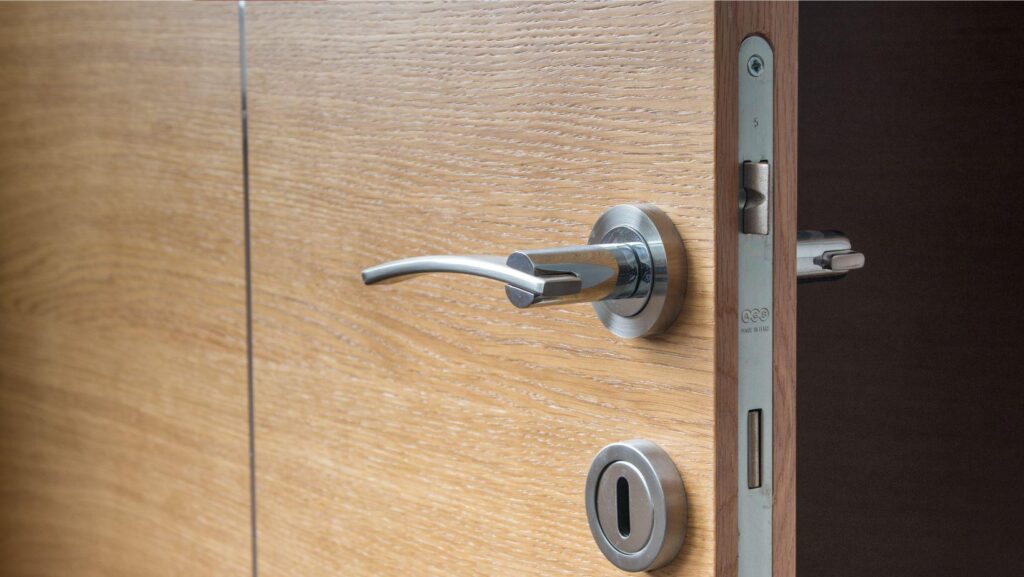
Small modifications create a significant impact when homeowners improve a residence for residents with limited mobility. Lever handles are a functional renovation feature because these mechanisms are simpler to operate than traditional round doorknobs. Residents open these doors with minimal gripping, twisting or finger strength, which makes daily movement more manageable. Installing lever handles in frequently used areas improves accessibility and allows homeowners to update the appearance and utility of doors.
Reducing Hand Strain
Traditional doorknobs require residents to grip the surface and rotate the hardware to open a door – this movement is difficult for residents who have decreased hand strength or discomfort when turning wrists. Lever handles operate through a simple downward or upward motion, which allows a resident to use a palm, forearm or elbow – this design reduces the amount of precise hand movement required to operate interior doors.
Replacing frequently used round doorknobs with lever handles during a renovation makes common activities easier. Bathroom, kitchen and hallway doors open multiple times each day – small improvements in operation have a noticeable effect. Choosing handles that move without resistance and do not require heavy force improves their utility for residents with limited strength.
Improving Door Accessibility
Lever handles make it easier to open doors when a resident carries an object or uses a mobility aid. A resident may not have two hands available to grip and turn a traditional knob. A lever allows the door to operate using another part of the hand or arm – this feature is helpful when a resident moves between rooms with a walker or prepares to transfer from a mobility scooter.
Door accessibility also depends on the surrounding space – A lever handle is easier to operate but a doorway remains difficult to use if furniture blocks the path or the opening is narrow. Homeowners can consider handling replacement alongside improvements to doorway width, flooring and room layouts. Combining the changes creates smoother routes through frequently used areas.
Supporting Bathroom Use
Bathrooms are important areas for hardware replacement because residents use these rooms often and require quick access. Lever handles allow residents to enter and exit the bathroom without demanding strong gripping or wrist rotation – this hardware is beneficial for residents who have difficulty with fine motor movements or who rely on physical supports while walking.
The choice of bathroom hardware accounts for moisture and regular use. Durable materials and smooth surfaces help handles remain functional. During a renovation, homeowners can pair lever handles with other improvements like grab bars, bright lighting, walk in showers and slip resistant flooring – these changes address different aspects of safe bathroom use.
Making Bedrooms Easier to Access
Bedroom doors benefit from lever handles because residents use them when tired, carrying belongings or moving with limited mobility. Easy hardware reduces the physical effort required to enter or leave the room – this is useful for residents who need additional support throughout the day.
The bedroom layout also supports convenient movement – Clear pathways between the bed, doorway, closet and bathroom lower obstacles. Features like adjustable furniture and lift chairs for seniors provide additional support. Lever handles complement these improvements – making the interaction with the door simpler.
Supporting Independent Living
Accessibility renovations are effective when they lower the need for assistance with household tasks. Lever handles contribute to independence because residents operate doors without relying on hand strength or precise finger movements – this hardware makes it easier to move between spaces while maintaining control over daily routines.
Lever handles also benefit visitors or household members with temporary mobility limitations. An injury or recovery period makes familiar features more difficult to use. Installing accessible hardware provides lasting practical value for various physical needs.
Planning a Practical Renovation
Replacing door hardware is a straightforward improvement but homeowners should consider the specific needs of the residents. Handles are most effective when positioned at comfortable heights and when they provide enough clearance for easy use. Residents should also check that hinges, latches and frames function properly. Upgrading the handle does not solve accessibility problems if the door itself is heavy or stuck.
A thoughtful renovation considers how individual improvements work together. Lever handles support easier door operation while wider pathways, bright lighting and accessible flooring address other movement challenges. By considering the elements together, homeowners create a comfortable environment that supports independence and adapts to changing mobility needs.
Conclusion
Lever handles are a simple and valuable improvement for residents who find traditional doorknobs difficult to grip or turn. The accessible operation of these tools reduces hand strain and makes frequently used doors easier to manage. When included in a broader renovation, lever handles help create a residence that is easier to navigate and more practical for residents with different mobility needs.