
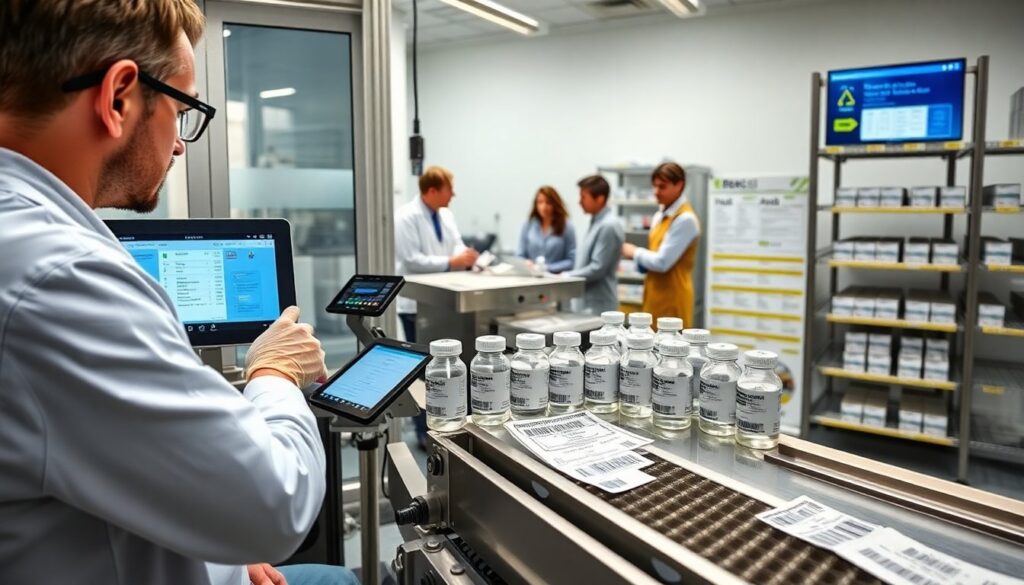
enhance pharmaceutical labelling viallabeller debsllc helps manufacturers reduce errors and speed operations. It captures data, prints labels, and logs events. The system links labels to batch records and lot numbers. Teams adopt it to meet safety and supply needs.
Key Takeaways
- Enhance pharmaceutical labelling with VialLabeller from Debs LLC to reduce errors and speed up production operations.
- Accurate vial labeling is essential for patient safety, regulatory compliance, and efficient supply chain management.
- VialLabeller improves compliance by printing high-resolution, serialized labels integrated with batch and ingredient data.
- Implementing VialLabeller requires clear label definitions, pilot testing, operator training, and IT system integration for smooth deployment.
- The system supports quality control with audit logs, electronic signatures, and validation tools to meet regulatory standards.
- Deploying VialLabeller delivers cost savings, faster throughput, reduced recalls, and measurable ROI by minimizing labeling errors.
Why Accurate Vial Labeling Is Critical For Pharmaceutical Safety And Supply Chain Integrity
Accurate vial labeling prevents dispensing errors and protects patients. Clear labels let pharmacists read dose, lot, and expiry. Accurate labels support recalls by tracing affected batches. Regulators check labels for readability and content. Supply partners rely on labels to route products correctly. Poor labels cause delays, returns, and financial loss. Manufacturers use automated systems to reduce manual errors. VialLabeller from Debs LLC improves label accuracy by linking label text to production data. The system reduces mislabel rates and shortens verification time.
Key Features Of VialLabeller That Improve Compliance, Speed, And Traceability
VialLabeller offers features that address common production needs. The system prints high-resolution labels at line speed. It embeds serialized IDs and barcodes on each vial. It timestamps each print event and stores a copy of the label. It connects to enterprise systems to fetch batch and ingredient data. Operators control label layout with a simple interface. The system supports audit logs and user permissions. These functions help teams meet label content rules and serialization mandates.
Implementation Best Practices For Seamless Integration On The Production Floor
Project teams define label requirements before hardware selection. They document required fields, barcode types, and material needs. Teams run a pilot on one line to test speed and readability. They verify label adhesion and scan rates in real conditions. Operators train on the HMI and basic troubleshooting. IT tests connectors to LIMS and ERP in a sandbox. Validation scripts run during installation and after software updates. Clear roles and a phased rollout reduce production risk.
Quality Control, Validation, And Meeting Regulatory Requirements
VialLabeller supports validation and quality checks. The system logs user actions and stores electronic signatures where required. It prints human-readable checksums and machine-readable codes for verification. Quality teams define inspection points and acceptance criteria. Validation documents map system functions to regulatory clauses. The system helps teams produce trace logs for audits. It also supports retention of label images and event records for required periods. These features help manufacturers show compliance to auditors.
Cost, ROI, And Operational Impact Of Deploying VialLabeller
VialLabeller lowers label error costs and reduces rework. It increases throughput by printing at production speed. The system shortens label verification time and reduces manual checks. Manufacturers estimate payback from fewer recalls and less scrap. Teams measure ROI by tracking error rates, downtime, and labor hours. The system uses standard printers and integrates with existing IT, which lowers deployment cost. Over time, it improves supply chain reliability and reduces financial risk.