
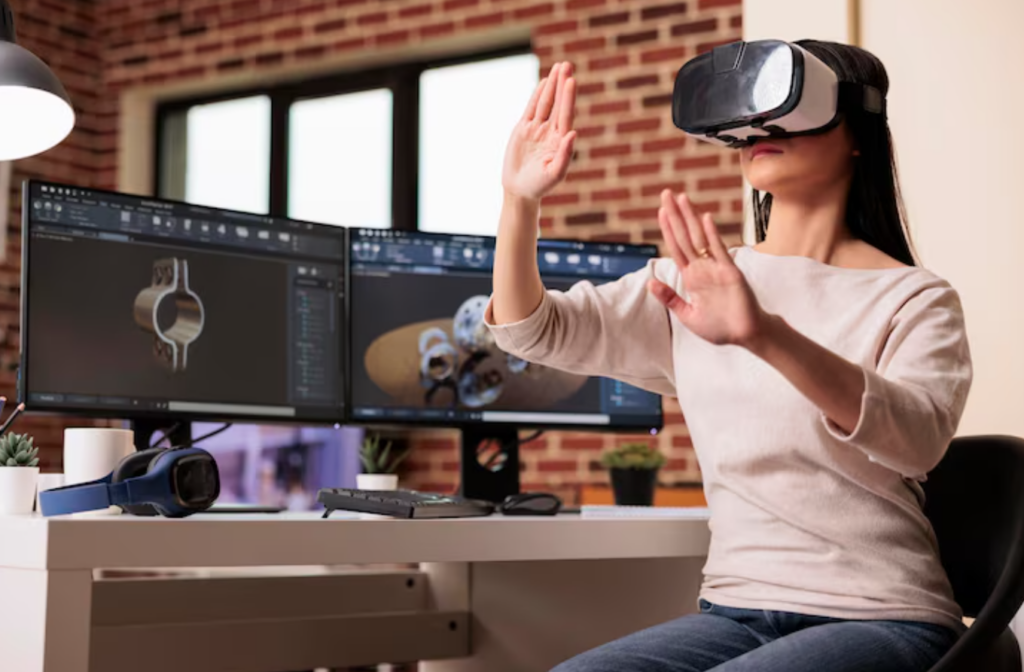
Digital experiences have evolved dramatically over the past decade. Users no longer expect simple images and static interfaces when interacting with online platforms, applications, products, and virtual environments. Instead, they seek immersive, visually rich, and highly interactive experiences that closely resemble real-world interactions. At the center of this transformation is 3D rendering technology, which has become a fundamental tool across numerous industries.
Advancements in computing power, graphics processing, cloud infrastructure, and visualization software have enabled organizations to create realistic digital environments that were once impossible or prohibitively expensive. Today, 3D rendering is shaping how people shop, learn, communicate, design, and engage with digital content.
As industries continue to prioritize user engagement and personalization, the role of 3D rendering in modern digital experiences is expected to expand even further.
Understanding 3D Rendering
3D rendering is the process of converting three-dimensional digital models into two-dimensional images or animations. This process uses mathematical calculations to simulate lighting, shadows, textures, reflections, and other visual elements that make digital objects appear realistic.
The technology allows designers and developers to create lifelike representations of products, buildings, environments, and characters. Depending on the intended use, renderings can range from stylized visualizations to photorealistic images that closely mimic real-world scenes.
Modern rendering techniques rely on sophisticated algorithms that accurately simulate how light interacts with surfaces, helping create visuals that feel natural and believable.
The Growing Demand for Immersive Digital Experiences
Consumer expectations have changed significantly in recent years. People increasingly engage with digital platforms through high-resolution devices, virtual environments, and interactive applications. As a result, organizations must find ways to deliver content that captures attention and maintains engagement.
Static images often struggle to communicate complex ideas or showcase products effectively. Three-dimensional visualization addresses this challenge by allowing users to explore objects and environments from multiple perspectives.
Whether examining a product before purchase, navigating a virtual building, or participating in online training simulations, users benefit from experiences that provide greater context and realism.
The Influence of Visual Communication
Research consistently shows that visual information is processed more efficiently than text. Realistic visualizations help users understand concepts faster, make decisions more confidently, and retain information more effectively.
By presenting information in a visually engaging format, organizations can improve communication while reducing misunderstandings and uncertainty.
Enhancing Product Visualization
One of the most significant impacts of 3D rendering can be seen in product visualization. Businesses increasingly rely on digital representations to showcase products before they are manufactured or physically available.
Detailed renderings allow consumers to inspect products from every angle, zoom into specific features, and evaluate design details that may be difficult to capture through traditional photography.
This capability is particularly valuable when presenting customizable products, where users can explore different colors, materials, configurations, and finishes in real time.
Improving Customer Confidence
Consumers often hesitate when purchasing products online because they cannot physically examine them. Realistic renderings help bridge this gap by providing a more accurate representation of what customers can expect.
The ability to interact with detailed visualizations contributes to increased confidence during the decision-making process and can improve overall customer satisfaction.
Transforming Architecture and Urban Planning
Architecture has been profoundly influenced by advances in rendering technology. Architects, planners, and stakeholders can now visualize projects long before construction begins.
Photorealistic renderings provide detailed previews of buildings, public spaces, and infrastructure projects. These visualizations help communicate design intent to clients, investors, regulatory authorities, and community members.
Instead of relying solely on technical drawings, stakeholders can experience projects in a format that is easier to understand and evaluate.
Supporting Better Design Decisions
Early visualization allows project teams to identify potential issues before construction starts. Lighting conditions, spatial relationships, material choices, and environmental integration can all be assessed through realistic renderings.
This proactive approach reduces costly revisions and contributes to more efficient project development.
Revolutionizing Education and Training
Educational institutions and training organizations are increasingly using three-dimensional visualization to enhance learning experiences.
Complex subjects often become easier to understand when learners can interact with realistic models and simulations. Fields such as engineering, medicine, science, and technical education benefit particularly from immersive visual content.
Three-dimensional environments allow students to explore structures, systems, and processes that may be difficult or impossible to observe directly.
Increasing Engagement and Retention
Interactive learning experiences encourage active participation rather than passive observation. Studies have shown that active engagement often leads to improved comprehension and knowledge retention.
By enabling learners to explore concepts visually, rendering technologies can create more effective educational experiences.
The Role of 3D Rendering in Entertainment
The entertainment industry has long embraced rendering technologies, but recent advancements have expanded what is possible in digital storytelling.
Movies, animation, gaming, and virtual experiences increasingly rely on highly detailed digital environments and realistic visual effects. Rendering enables creators to build immersive worlds that captivate audiences and enhance narrative experiences.
As hardware capabilities continue to improve, consumers expect increasingly sophisticated visual quality across all forms of entertainment.
Creating Realistic Virtual Worlds
Modern rendering techniques support dynamic lighting, realistic materials, advanced physics simulations, and detailed environmental effects.
These capabilities contribute to more believable digital worlds that strengthen audience immersion and emotional engagement.
Supporting Virtual and Augmented Reality
Virtual reality (VR) and augmented reality (AR) represent some of the most exciting developments in digital interaction. Both technologies depend heavily on high-quality rendering to create convincing and responsive environments.
In virtual reality, users are fully immersed in digital spaces that must respond naturally to movement and interaction. In augmented reality, digital objects are integrated into real-world environments.
The effectiveness of both experiences depends on accurate rendering that maintains visual consistency and realism.
Expanding Practical Applications
Beyond entertainment, VR and AR are increasingly used for education, training, design review, healthcare, tourism, and remote collaboration.
As these technologies become more accessible, demand for realistic rendering solutions continues to grow.
Improving Marketing and Digital Communication
Marketing strategies increasingly depend on visual content to attract and engage audiences. Three-dimensional rendering enables organizations to create compelling imagery that highlights products, environments, and concepts in ways that traditional media often cannot.
Visualizations can be adapted for websites, social media, presentations, digital advertising, and interactive campaigns.
This flexibility allows organizations to maintain consistency across multiple communication channels while delivering engaging content.
Communicating Complex Ideas
Certain products and systems are difficult to explain through text alone. Detailed renderings can simplify communication by providing visual representations that clarify functionality and design.
This approach is especially useful when introducing innovative concepts or highly technical solutions.
The Rise of Real-Time Rendering
Traditional rendering processes often required substantial processing time to generate high-quality images. Recent technological advancements have enabled real-time rendering, allowing users to interact with digital environments instantly.
Real-time rendering supports applications where immediate visual feedback is essential, including gaming, virtual collaboration, product customization, and design visualization.
The ability to make adjustments and view results immediately enhances efficiency and user engagement.
Enabling Interactive Experiences
Real-time rendering allows users to become active participants rather than passive viewers. They can modify environments, explore alternatives, and interact with digital content in meaningful ways.
This interactivity contributes to richer and more personalized experiences.
Sustainability Benefits of Digital Visualization
As organizations seek more sustainable practices, digital visualization offers several environmental advantages.
Creating realistic renderings can reduce the need for physical prototypes, printed materials, and repeated design revisions. By evaluating concepts digitally, teams can make informed decisions before investing resources in physical production.
This approach helps minimize waste while supporting more efficient workflows.
Reducing Resource Consumption
Digital reviews and virtual presentations can also reduce travel requirements and facilitate remote collaboration. These efficiencies contribute to lower resource consumption and support broader sustainability goals.
The Growing Importance of 3D Rendering Services
As digital experiences become increasingly sophisticated, many organizations are turning to specialized expertise to achieve high-quality visual outcomes. The demand for professional 3D rendering services continues to grow across industries such as architecture, education, manufacturing, entertainment, retail, and digital media.
These services help organizations create accurate, engaging, and visually compelling content that meets modern user expectations. As rendering technologies continue to advance, their influence on digital experiences is likely to expand even further.
Conclusion
3D rendering has become a transformative force in the digital world. By enabling realistic visualization, immersive interaction, and effective communication, it is reshaping how people engage with products, environments, information, and entertainment.
From architecture and education to virtual reality and marketing, rendering technology supports more engaging and meaningful digital experiences. Advances in real-time processing, visualization quality, and interactive capabilities continue to push the boundaries of what is possible.
As organizations seek new ways to connect with audiences and improve user experiences, 3D rendering will remain a critical component of digital innovation. Its ability to transform abstract concepts into realistic and interactive visual experiences ensures that it will play an increasingly important role in the future of digital communication and engagement.